Cádiz

The first weekend in September, before school started, we rented a car to drive to Cádiz, a port city located in the southwest of Spain.  Not only is it considered to be “the oldest continuously inhabited settlement in Europe” (Lonely Planet), but it also offers a tasty homegrown morsel, Turrón de Cádiz.

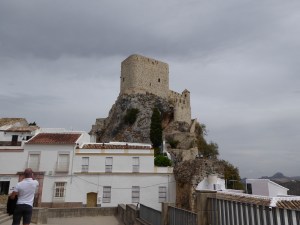
On the way, we stopped in Olvera, one of the many pueblo blancos that are scattered throughout Andalucía.  It seems that after the Muslims entered the Iberian Peninsula back in 711, they built fortresses atop rocky outposts.  And after the Christians defeated the Muslims over the course of 770 years, they built churches, either on top of or next to these fortresses, or on top of mosques.

In Olvera we toured the fortress and ate our last reasonably edible meal until our return to dining en casa in Granada. {Click on picture for slide show.}

Once in Cádiz, we stayed in a typical four-floor walk up with narrow balcony and competing central air shafts, one off the hallway and kitchen, and one off the back bedroom.  The sounds and aromas of Cádiz living greeted us throughout the day and night.
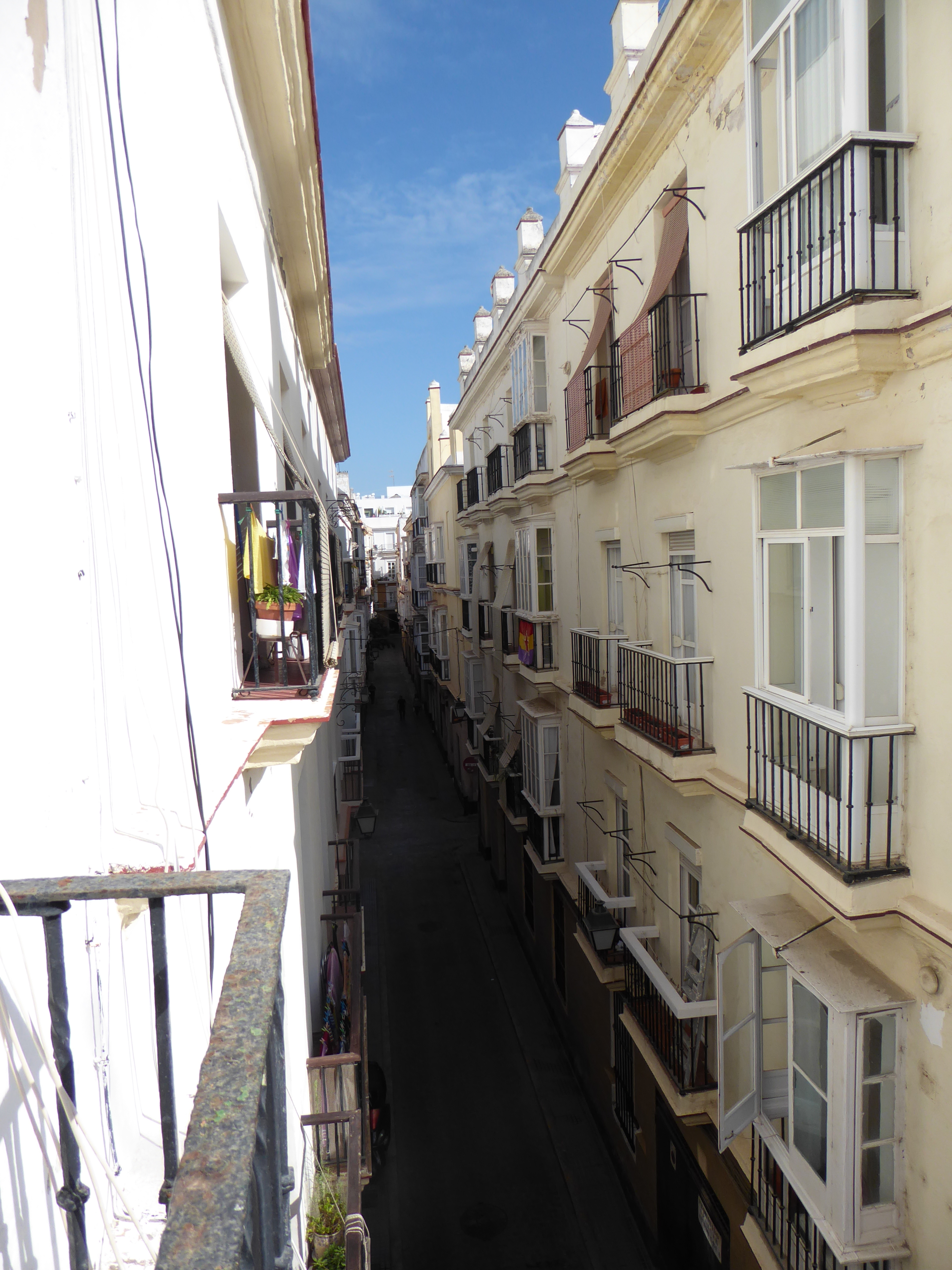
P1000550

From the narrow balcony

Old Cádiz itself is a narrow peninsula jutting demurely into the Atlantic ocean, 1.8 kilometers long, 1.3 kilometers wide.  We walked everywhere:  we climbed the steps of Torre Tavira (MDCCLXXVII erecta) to enjoy the camera obscura; we ambled to Castillo de Santa Catalina and walked around the 5-pointed fortress (MDCXX erecta); we circled the interior ramp to the bell tower atop the Catedral (MDCCCXXXVIII erecta); we force-marched along the breakwater to Castillo de San Sebastián (MDCCVI erecta).  Eventually, we simply went to the beach (please insert today’s date, subtract 3.8 billion years and convert to Roman Numerals).

In the mornings, we ate a simple Spanish breakfast of toast topped with grated tomato and olive oil, orange juice, and café con leche.  Lunch consisted of ice cream, in either a cone or bowl, and Kas orange soda pop, in addition to a cheese sandwich.  At night, we stopped at one of the many neighborhood plazas for a dinner of tapas and beer.  Things really didn’t get going until 9 or 10 p.m.  Then we could choose among a myriad of tapas:  ham, ham with cheese, cheese with ham, shrimp (presented in their efficient exoskeletons) either boiled, grilled, or fried; ham and cheese croquettes, chicken and cheese croquettes, fried calamari, fried octopus, fried fish, potatoes in olive oil, potatoes in spicy mayonnaise, along with many other options, either fried, boiled, covered in mayonnaise, or fried.

Orange Soda Pop

Kas Orange Soda Pop

We were reluctant to leave historic Cádiz.  The streets were clean, flat, cobbled and often free of cars. Vistas opened onto ocean and bay.  The houses and apartment buildings were topped with reminders from the merchant days of the 1800s — watchtowers — of which 126 still remain.  We also bought alpargatas in Cádiz, which was something we had never done before.  Another name for alpargatas is espadrilles, if you are speaking French.  Which we weren’t.  We were barely speaking Spanish because everyone who did insisted on leaving the endings off of all their verbs, nouns and adjectives.  They also seemed to mumble in a rapid and confident way.  This is why we ended up with the boiled shrimp omelet and the chicken and cheese croquettes for dinner at Plaza de Mina.

We knew we had to get the rental car back in time, so we left one early afternoon, drove through the pueblo blanco of Arcos de la Frontera, and by 7:30 p.m. managed to park the car in the steep, dark, narrow, winding underground parking garage at Thrifty-Granada without a scratch.

School Daze, Part II

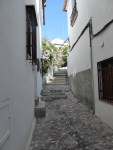
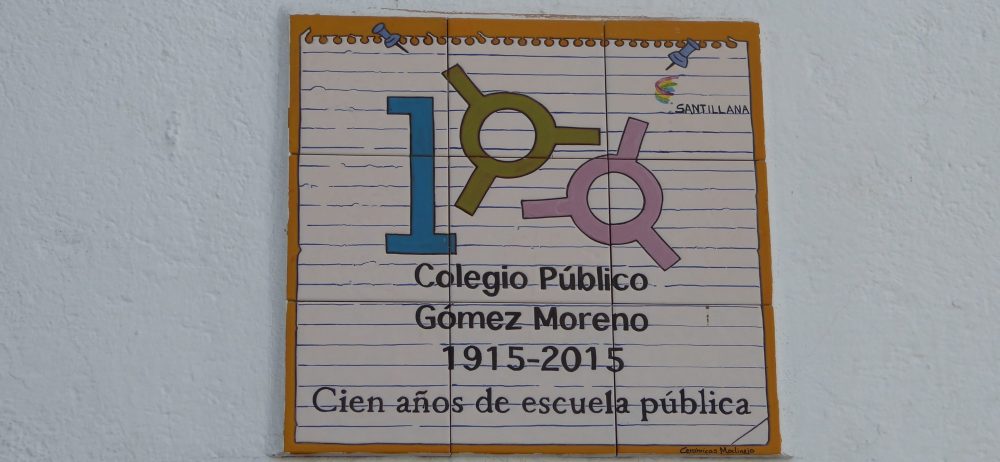
To get to school, A. & J. walk up a series of steep cobblestone lanes.  The school, Colegio Público Gómez Moreno, is situated next to the most visited mirador in all of Granada, Mirador San Nicolas.

Both kids are doing really, really well in inglés.  A few times during the week A. & J., along with some other ex-pat kids, leave the classroom to study Spanish with a warm and lovely teacher, who never raises her voice and who hands out candies during lessons.  Once a week after school, A. & J. work with a Spanish tutor who never raises her voice and who lives in a cave on Veredillas de San Cristóbal.  Because of this extra help, J.s first complete sentence in Spanish, constructed solely by himself, late at night after a long day, was “Mi familia es muy mala.”  Like parents delighting over their child’s first steps, D. & M. swooned.  Sort of.

P1010002

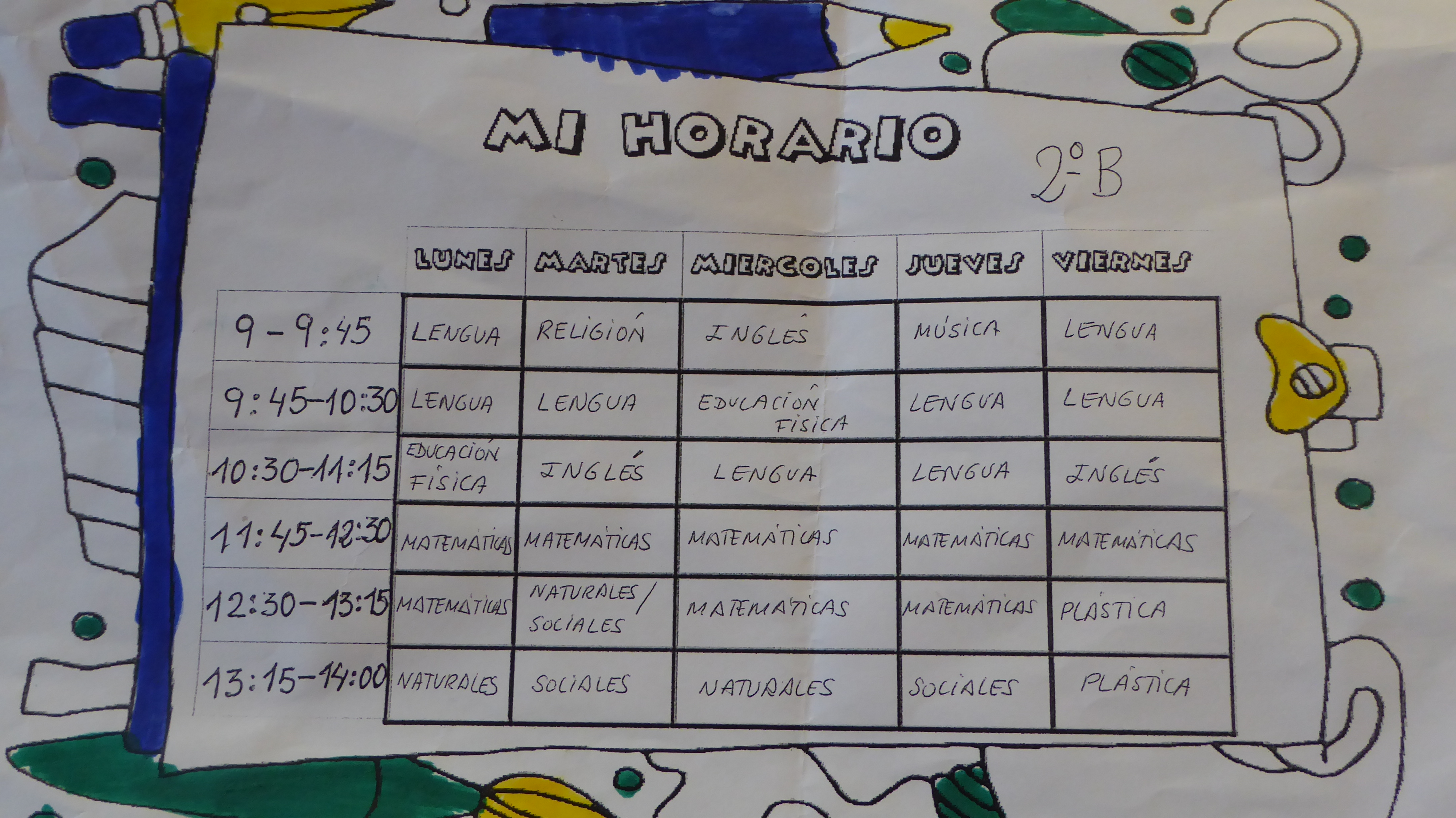
J.’s schedule.

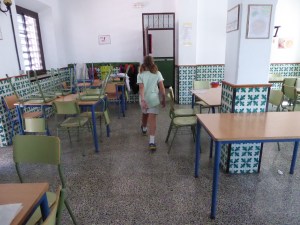
Perhaps no other part of the school day — neither standing in line with your group to enter the building in the morning, nor sitting in class all day listening to people around you speak in a foreign language, nor forgetting to bring your change-of-shirt and towel to P.E., nor having to hold it all day because no one told you that you have to ask for toilet paper from the teacher — causes as much disharmony as comedor.  The cafeteria.

As you recall from your own school days, going to the cafeteria to sit amongst people you know, speaking a familiar language, and digesting familiar, though somehow sad-looking, food, was never an easy task.  At Gómez Moreno, the students sign up for organic food, prepared fresh each day by qualified cooks. No student — neither Spanish nor otherwise — seems to be impressed by these facts.  They still have to eat the red gazpacho, the brown lentil soup, the squid presented in its black ink.  Of course, many students enjoy these dishes and eagerly consume a plate of pork loin or grilled hake*.  As a self-identified vegetarian, A. has only to eat the vegetables — the hunk of dry spinach, the mound of rice with the squid’s black ink inadvertently added on.

Lunch is served at 2 p.m., at the close of the school day.

*{Hake is quite a mild fish, with a white flaky texture and a flavour that is more subtle than that of cod. The fish has a soft, iron-grey skin and silvery belly. The flesh when raw is naturally very soft, but when cooked it becomes firm and meaty.” — www.bbc.co.uk/food/hake}

School Daze, Part I

cwvDm9asA_Lw9YsGTQNy8vW7Zxw

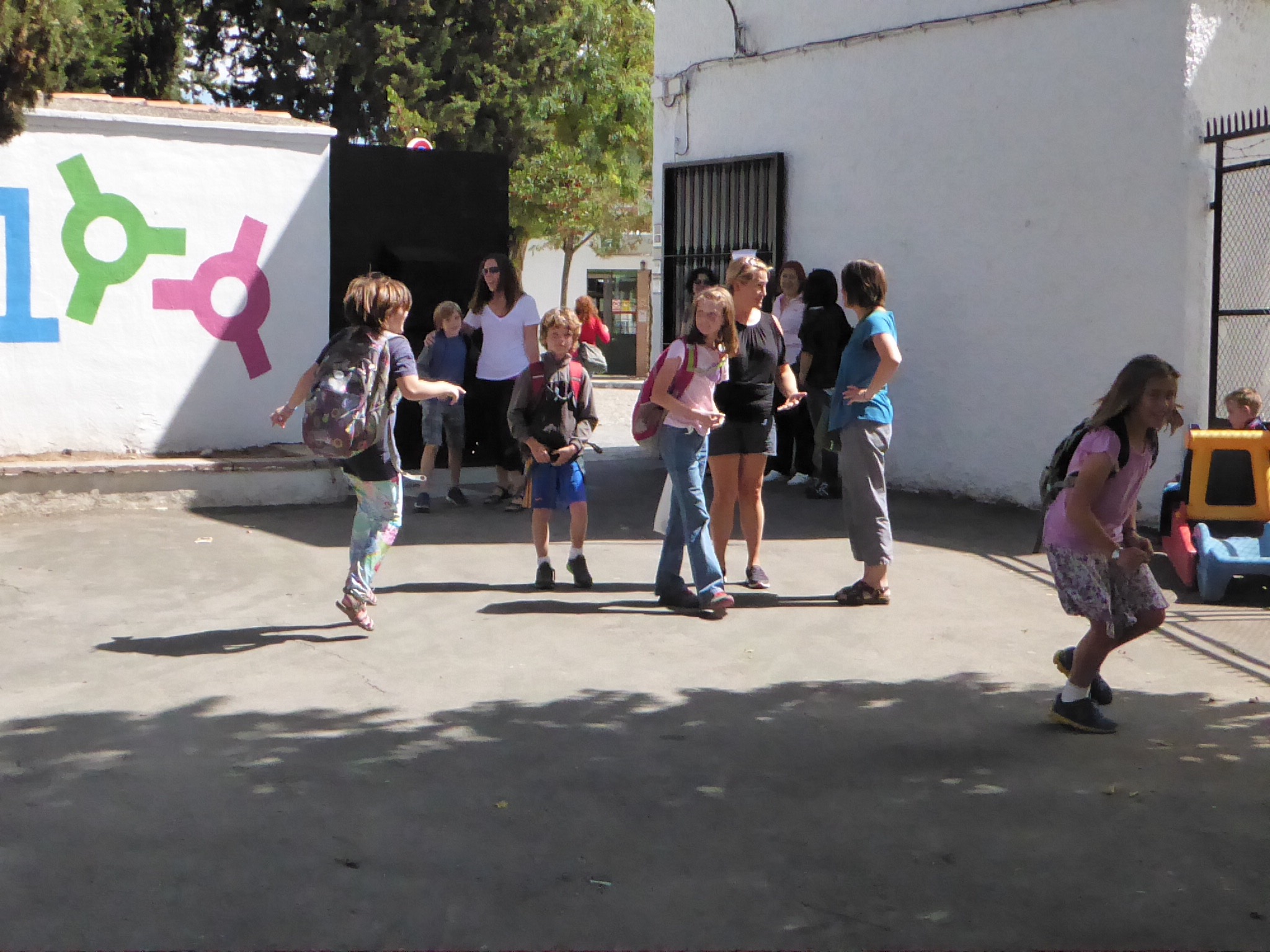
Some of you might be wondering what school days are like for the kids; so are we.  A. & J. gather in the school yard of Colegio Público Gómez Moreno around 9 a.m., Monday through Friday, with a horde of other kids, pre-school through sixth grade.  They trot off into the building, and what happens between then and pick up, at around 3 or 4, is what the Spanish might term “el mysterio.”

Some days we get debriefings on walks home from school.  This information is then corroborated through other ex-pat children we know who attend Gómez Moreno.  However, we cannot fully verify the information we are about to present.

P1000642

A.:  A.’s teacher speaks excellent Spanish but no English. (Verified.) This means that when she yells at the children during class, A. does not understand a word, and that is good.  She is also affectionate to the children and has a soft spot for A., also good.

cwvDm9asA3Lw9ZNWAbl5esXDcQ-1

Instruction is text-book dependent.  Students read out loud from the text book about science or literature or social studies.  The teacher also reads out loud from the text book.  Then the students read out loud from the text book again.  In music, the teacher reads out loud from the text book. Text books must be covered in plastico. The parents must prepare the books at home, after searching the city for the proper plastico; the plastico element is harder than it sounds.

So far, in art, the students have colored in a picture of Christopher Columbus.  This is also harder than it sounds.  There are specific colors that have to go in specific places and if they don’t go in those places, the students experience grief.  (Note:  use el color naranja for C.C.’s hair.)

There is no toilet paper in the bathrooms; students must ask the teacher for some if they need it.  Consensus strategy:  Hold it.

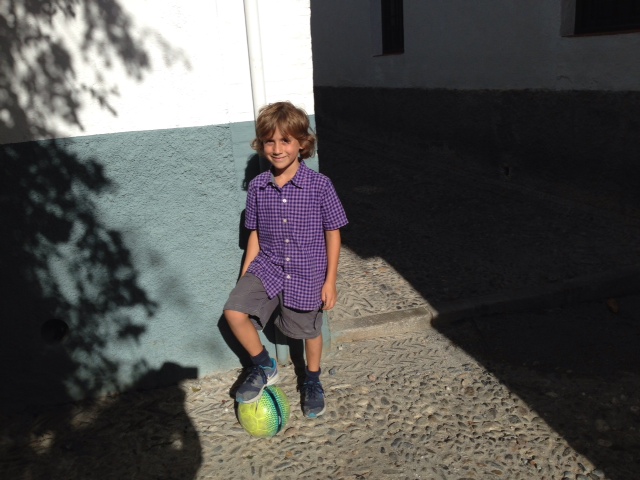
J.:  J. plays soccer during recess. (Verified.)

photo-1