As many of you know, the word for pomegranate in Latin is Punica granatum, but it may come as a surprise to learn that in Spanish the word for pomegranate is granada. In Granada the symbol of the pomegranate can be found almost anywhere. The origin of the city’s current name comes from a Jewish settlement originally located on the right bank of the Rio Darro, situated under the hill of the Alhambra, called in Arabic Garnata-al-Yahud, Granada of the Jews.
-

- The Rio Darro wends its way down from the Alhambra….
-
- …through the Puente Cabrera….
-

- ….and underneath Calle Reyes Católicos.
It appears that when the Jews were forced to leave Spain during the Middle Ages, they were also compelled to take the name al-Yahud with them, leaving the simple title Granada in its place.
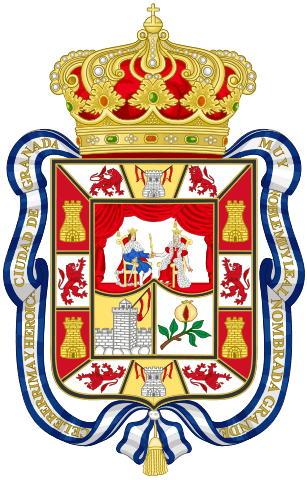
Coat of Arms of Granada: Just one of many pomegranates featured in a city called Pomegranate.
We have yet to grow tired of pomegranates, though they have been placed in public view as if they were traffic cameras recording our every move. It is true they feel like guardians, in this case benevolently watching over us as we ramble through the city.


But they also give us confidence in the Ayuntamiento of Granada, since the city has deemed it good and well that the pomegranate be molded into almost every public utility.


The locals have learned the value of the pomegranate and have chosen to place it where ever they can and as often as possible.


Thus, in Granada, all roads lead to pomegranates.
-

- This space left intentionally blank.
-

- This space also left blank.
-

- Blank.
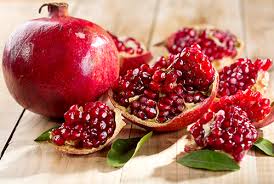
Tart, sweet, juicy, and fun. Stains your fingers if you eat a lot of them. (Please do not eat the rind.)















 pomegranate2015