We took the long way home, first heading west through the south of Spain to Conil de la Frontera, then through the Algarve in the south of Portugal and north to Lisbon. Why stop in Conil de la Frontera you may ask?
ANSWER: “It has six beaches: La Fontanilla Beach, El Roqueo Beach (with a 1936 Civil War bunker), Fuente del Gallo Beach, Punta Lejos Beach, Cala del Aceite Beach and Los Bateles Beach. Playa los Bateles is the longest and the most popular in the summer. Conil de la Frontera is primarily a vacation town and the majority of the tourists are Spanish although you often also hear German as well in town.” (Wikipedia)
In addition, we arranged to spend a weekend in Conil with some American friends before we all went our separate ways. We visited the beaches, we spent an afternoon in the pueblo blanco Vejer de la Frontera, and some of us climbed a tree.
-
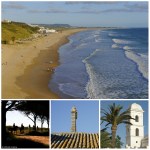
- Conil de la Frontera, Costa de la Luz, Andalucia, España.
-
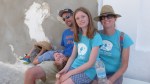
- Our American friends.
-
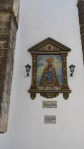
- Iglesia del Divino Salvador in Vejer de la Frontera.
-

- 25 Years – Loneliness.
-

- Vejer de la Frontera: an old Moorish town; a Catholic church atop a mosque.
-
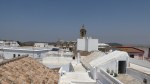
- Above it all.
-
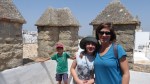
- Storming the ramparts.
-
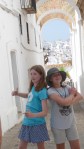
- ¡¡¡¡¡Amigas!!!!!!
-
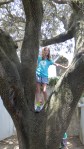
- An…
-
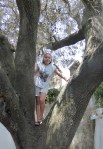
- equal…..
-
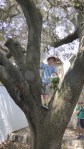
- opportunity……
-
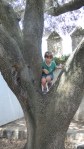
- tree.
-
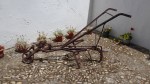
- Farm implement in urban setting.
-
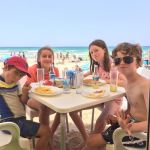
- La vida es buena.
Our separate way led along the A-48, skirting Cádiz {see “Cádiz,” posted October, 2015}, Jerez de la Frontera, and Sevilla {see “Sevilla,” posted December 2015}. {Note for lovers of Sherry: “Sherry can only be made in one place, the area lying between Jerez de la Frontera, Puerto de Santa María and San Lucar de Barrameda in the province of Cádiz, the so called Sherry Triangle. The secret is the combination of soil (the chalky, crumbly, moisture-retaining albariza), the damp climate which encourages the growth of the flor (a coat of yeast that forms on the aging wine and prevents it from oxidising) and the solera system used to blend the different vintages“ {see the website andalucia.com}.
At the junction to Sevilla we took a sharp left on to the A 49 and made our way west to the Rio Guadiana, demarcating Spain and Portugal.
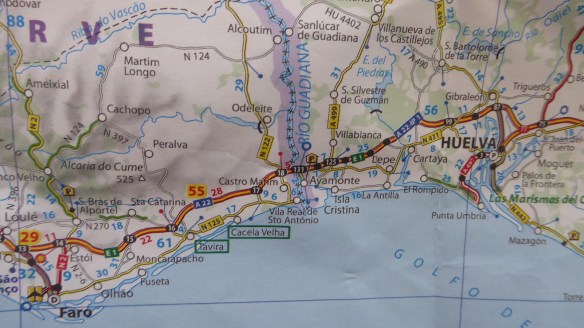
Don’t forget to order the gamba a la plancha in Ayamonte.
QUESTION: Why did we skip the tourist-saturated south coast Portuguese towns of Lagos, Praia da Rocha, and Albufeira, you are wondering?
ANSWER: So that we could explore the wild weeds and sandy plots of the hidden west coast gem, Carrapateira!


Our neighbor in Granada, Antonio, had promised us that Carrapateira was worth the long drive and the isolated feel. He was right. The village was part of a protected nature area so there were no high rises or hordes of tourists or golf courses or disco bars. (If those are the sorts of things you are interested in, we suggest you visit Lagos or Praia da Rocha or Albufeira.)
The Portuguese people whom we met spoke English — and Portuguese — and usually Spanish, along with one or two other languages. When you went to a café you didn’t have to order ham. Mostly, we went to the beach.


In addition to the beach at Carrapateira, we also made our way to Praia de Odeceixe, Sagres, Salema and a hidden beach situated somewhere off the N125 that requires a 1.5 kilometer walk in through a dirt path traversing a coastal woodland and that’s all I’m going to say about it. (Except that it was incrível!)
-
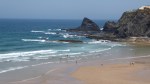
- Praia de Odeceixe.
-

- Jonah proving that we visited Praia de Odeceixe.
-

- Some other amazing inlet.
-
- So many beaches, so little time!
-
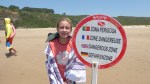
- Take your pick!
-
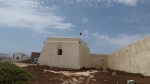
- For some reason we toured Sagres Fort.
-
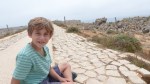
- It was a long way around past cliffs,a lighthouse, and more cliffs.
-
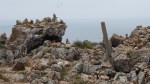
- It was hot out.
-

- Others before us, bored or inspired, had arranged rocks.
-
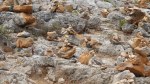
- There were a lot of rocks.
-
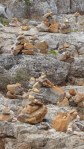
- Here are some of them.
-
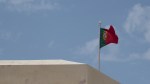
- Will tourists, far in the future, wander our empty shopping malls in wonder and boredom?
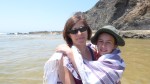
QUESTION: Why do these people look so happy?
ANSWER: Because for a particular moment in time, they are.
 pomegranate2015