School Daze, Part I

cwvDm9asA_Lw9YsGTQNy8vW7Zxw

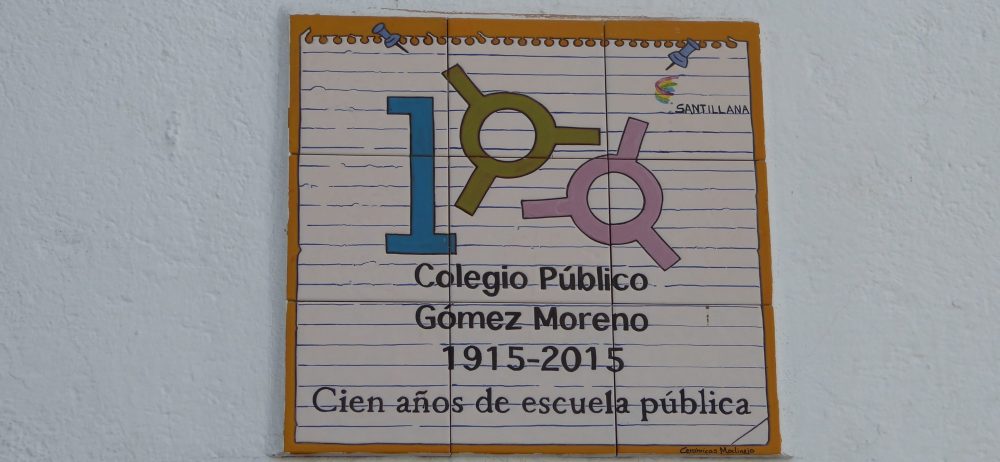
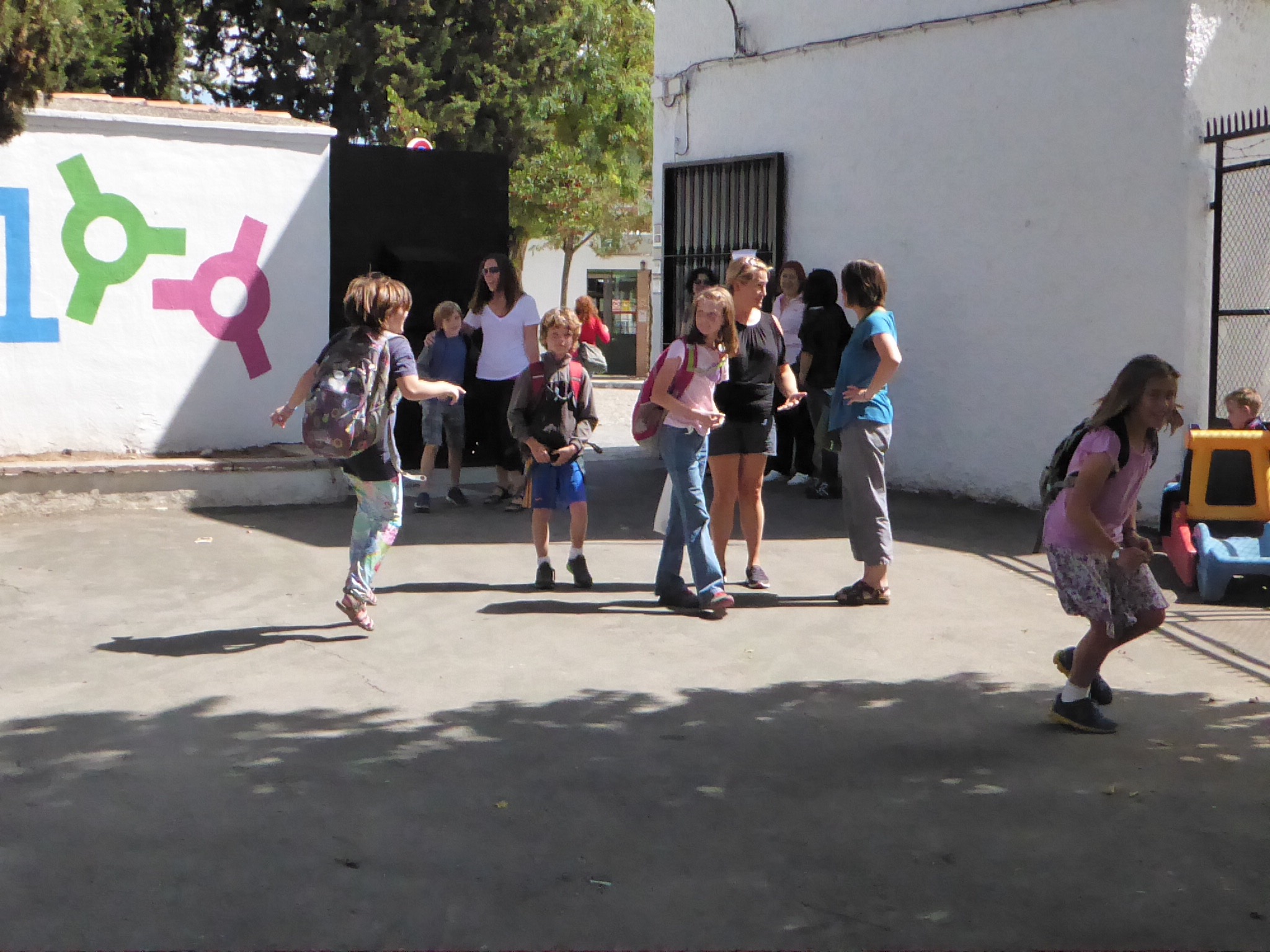
Some of you might be wondering what school days are like for the kids; so are we.  A. & J. gather in the school yard of Colegio Público Gómez Moreno around 9 a.m., Monday through Friday, with a horde of other kids, pre-school through sixth grade.  They trot off into the building, and what happens between then and pick up, at around 3 or 4, is what the Spanish might term “el mysterio.”

Some days we get debriefings on walks home from school.  This information is then corroborated through other ex-pat children we know who attend Gómez Moreno.  However, we cannot fully verify the information we are about to present.
P1000642

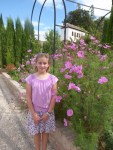
A.:  A.’s teacher speaks excellent Spanish but no English. (Verified.) This means that when she yells at the children during class, A. does not understand a word, and that is good.  She is also affectionate to the children and has a soft spot for A., also good.
cwvDm9asA3Lw9ZNWAbl5esXDcQ-1

Instruction is text-book dependent.  Students read out loud from the text book about science or literature or social studies.  The teacher also reads out loud from the text book.  Then the students read out loud from the text book again.  In music, the teacher reads out loud from the text book. Text books must be covered in plastico. The parents must prepare the books at home, after searching the city for the proper plastico; the plastico element is harder than it sounds.

So far, in art, the students have colored in a picture of Christopher Columbus.  This is also harder than it sounds.  There are specific colors that have to go in specific places and if they don’t go in those places, the students experience grief.  (Note:  use el color naranja for C.C.’s hair.)

There is no toilet paper in the bathrooms; students must ask the teacher for some if they need it.  Consensus strategy:  Hold it.

J.:  J. plays soccer during recess. (Verified.)
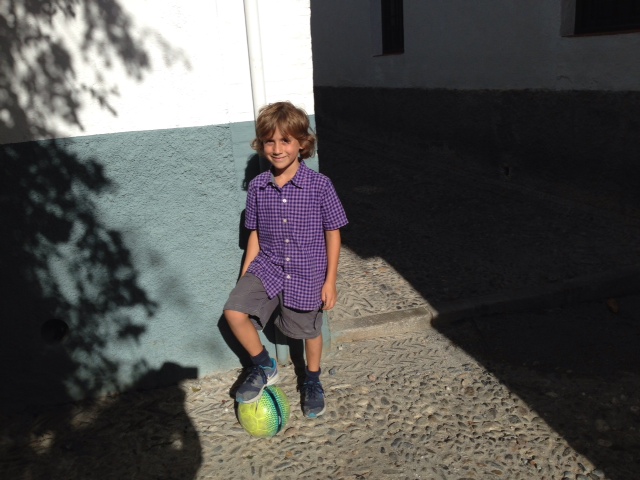
photo-1

First Days

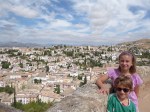
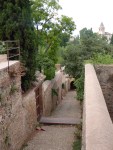
Our first days in the Albayzin were ones of amazement.  We approached the alleyways, secret fountains, and cobble stoned streets with wonder.  We avoided the dog poo and the darting scooters with newfound artistry.  Church bells rang throughout the Albayzin at various times, but never precisely on the hour.  Dogs barked, tourists called out to each other, and children’s voices pattered in perfectly executed Spanish.  These kids were only five, four or three years old, and yet they had somehow mastered use of reflexive pronouns, irregular verb forms, and use of the imperfect and pluperfect subjunctive.  Qué bueno!

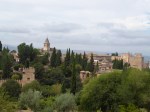
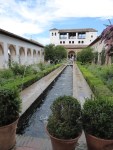
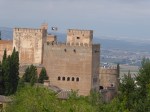
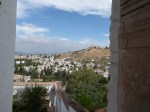
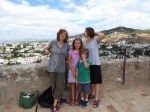
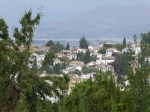
We visited the Alhambra to tour Generalife and the Alcazaba.  This giant fortress sat atop Sabika Hill; it was a sentinel from the past that now provided the life blood of Granada.  We tried to find our little house as we looked down from Torre de la Vela, but to no avail.  Ours was just another white-washed, ocher-tiled casita on the hill, with a terrace, patio, grape arbor and fish pond.  Oh well.

Getting Here

On August 18th we flew from Stockholm to Granada.  At Stockholm City Center, we took the high-speed Arlanda Express to the airport, which topped out at 205 kph (127.3811 mph).  Upon changing planes in Madrid, we flew on Iberia Airlines in a CR2 Bombardier jet reaching a maximum speed of 535 kph (332.4435 mph). From there, D., A., and J. rode on the Autocares Jose Gonzáles bus to Plaza Nueva, traveling a good 80 kph (49.709 mph) for much of the journey. Meanwhile, M. rode with Ricardo, our landlord, and our luggage, in a Peugot 107 achieving an ultimate speed of 90 kph (55.924 mph) on the Autovia. Once in Plaza Nueva, D., A., and J. changed buses to the intercity C1, which brought them into the Albayzin, our new neighborhood.  The C1 purportedly travels at top speeds of 30 kph (18.641 mph).

Our new neighborhood:  the Albaycin

 We are now traveling at a steady 4 kph (2.48548 mph) on foot.