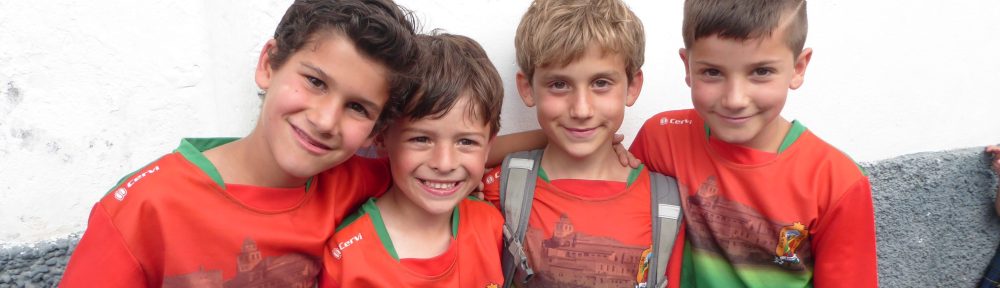
When we last left off, J.’s coach had nutmegged the FIFA bureaucracy and J. was playing with his club Rayo Eneas under the nombre de jugar of a Spanish national who had dropped off the team, Emberto (not his real name). Now, on the occasional chance that J. scored a goal, Emberto’s name showed up in the stats.
-

- Will remain nameless…
-

- ….
-
- …and precious.
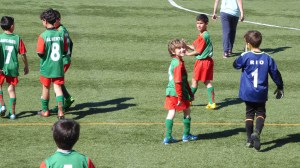
These kids were just seven and eight years old but they played like pros. The coaches and parents took the games seriously and our family poured over the team standings each week. For away match ups, we travelled to outlying pueblos where each field featured the requisite café/bar: a frazzled fan could order café con leche, cerveza or vino tinto like a civilized person and try to enjoy the agony of the game.
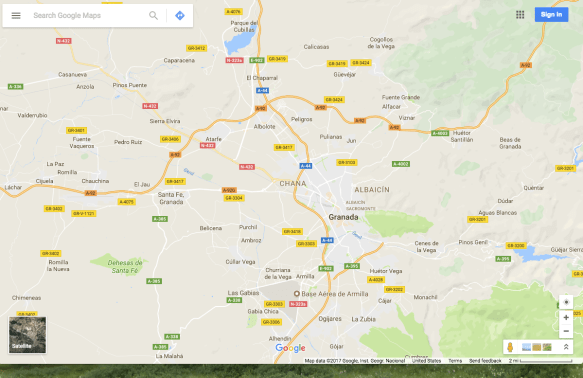
Pulianas, Albolote, Santa Fe, Atarfe and Armilla all offer beer and other beverages at the field.
Play was rough. Occasional scrapes were inevitable, especially since most matches were held on Astroturf which resulted in a faster ball and some mean road rash when players fell. But the tenor was positive. Teams shook the hands of the referee and opposition, then turned to the stands to applaud the parents before kick off.


With that in mind, we approached our second season match up with Armilla de Arenas, Rayo’s arch nemesis. This rivalry had a history beyond our ken. The coaches played on adult club teams and so had their own reputations to maintain; people remembered who beat whom and by what score from games gone past. Already Armilla was ahead by a game in the season’s earlier match up. Their goalie had a tendency to delay play by holding on to the ball and flopping to the turf.
For this rematch — one that would determine the season’s champion — a photographer from the local paper was present, some moms had created a fanciful banner, each coach brought his entourage, and because it was a home game, the stands were filled with parents, fans, relatives and kids from the local escuela pública Gómez Moreno.


On the field, the boys shouted pasa, sigue, falta and saque de mano like professionals. J. on defense for Rayo and Migué on offense for Armilla battled for possession. True to expectation, the Armilla de Arenas goalie hogged the ball. Then, with the score 1:0 Armilla, and before anyone could order another café con leche, two grown men from the opposing teams — who had been coaching on the sidelines — started slugging it out and throwing chairs. The referee blew his whistle. Players raced off the field, scrambled up the cement wall and into the arms of their parents, tears running down their faces. ¡¿Qué está pasando aqui?!


In the end, Rayo Eneas lost the game, coming in second place in the season’s standings — still worthy of a crowd-pleasing trophy. For Rayo, the assistant coach had to leave his position in disgrace and the team brought in a psychologist for the boys to have a full-on session of counseling to deal with the adult display of violencia. Ultimately, Rayo invited Armilla de Arenas back for a friendly. Apologies were made, pictures of unity were taken, though every Rayo fan confirmed that it was the coach from Armilla who started the whole thing. For objective reportage, please scour the sport’s section of Ideal for full details.


After months of matches, the season ended some time in May. J. had survived the aggressive European club style of soccer, travelled to the pueblos of Atarfe, Abolote and Pulianos — to name just a few — developed a following of fans, made good friends and learned some choice Spanish swear words. For the final celebration, the coaches arranged for a fiesta at a local café in the Albayzin and each boy on the team got his turn to take the trophy cup home for some days of glory.


 pomegranate2015
a super report with great photos and you conveyed a sense of tension as the final game approached
LikeLike